

_thumbnail.jpg)
_thumbnail.jpg)



.jpg)

Abstract
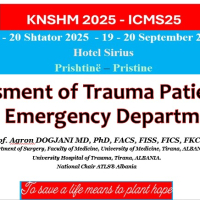
Introduction: The initial assessment of trauma patients is more than a process and indeed an intervention that is life-saving in the emergency care continuum. It is a time-sensitive, organized process for identifying and managing life-threatening conditions. This phase—best provided using standardized techniques like Advanced Trauma Life Support (ATLS®)—is the cornerstone to reducing morbidity and mortality in trauma patients.
The assessment begins with a rapid primary survey, with immediate evaluation and stabilization of the airway, breathing, and circulation (ABCs) as priorities. This is a pathway that allows for the rapid recognition and management of immediately life-threatening conditions, including airway obstruction, tension pneumothorax, cardiac tamponade, and massive hemorrhage. As the primary survey proceeds, a brief yet focused history using the "AMPLE" mnemonic (Allergies, Medications, Past medical history, Last meal, Events/environment) guides clinical judgment and directs further care.
Following initial stabilization, a secondary survey—a head-to-toe systematic assessment—is conducted. This detailed methodology is designed to identify injuries missed in the initial assessment. It entails a meticulous physical examination, adjunctive diagnostic imaging, and laboratory testing to guide definitive treatment planning.
Effective trauma care depends on a multidisciplinary team in which each member, including you, matters. Good, clear communication among members of the trauma team is critical for task prioritization, role allocation, triage decisions, and the prevention of breaks in patient handovers. Effective patient transport to definitive care facilities is also coordinated according to clinical severity and resource availability.
In conclusion, initial trauma assessment is a protocol-driven, active process designed to optimize outcomes through early detection, prompt treatment, and comprehensive examination. Continuing education and simulation training are not only valued but also required to maintain clinical readiness and improve trauma system performance.
Keywords: trauma care, outcomes, communication, assessment, trauma management